Home
Individual Therapy Intensives Anxiety Trauma Burnout
About Investment Blog Free Consult →
Michaela Kozlik, LCPC
Illinois Licensed Therapist · Telehealth Statewide

You're holding it
all together.
Who's holding you?Illinois therapist for high-functioning women — anxiety, trauma, burnout & perimenopause therapy via telehealth.

Depth-oriented therapy for high-functioning women in Illinois who are exhausted from managing everything well — and ready to go somewhere deeper than insight and coping skills have been able to reach.


You might be here because

You know yourself well.
And you're still stuck.

You've done the work. Read the books. Have the vocabulary. And something — some pattern, some weight, some quiet unraveling — keeps showing up anyway. That is not a failure of effort. It is a signal that the approach needs to change.

The anxiety does not quiet down no matter how much you understand it

You're high-functioning on the outside and barely holding it together inside

Rest does not touch the exhaustion

You can see your patterns clearly and repeat them anyway

You're not sure who you are when no one needs anything from you

Something shifted — in midlife, in your body, in your sense of self — and you do not recognize yourself anymore


"The nervous system recognizes resonance before the mind does. That's where the work begins."


How we work

The approach follows you —
not the other way around.

I work somatically, which means we include the body — not as a side note, but as a primary source of information. What the mind has organized around, the body still holds.

Using IFS-informed, depth-oriented, and nervous-system-based approaches, we work at the level where lasting change actually happens.

Somatic Therapy
Working with sensation, breath, and body awareness to access what words alone cannot reach.
Internal Family Systems
Parts-based work that brings curiosity rather than judgment to every aspect of you.
Polyvagal-Informed
Understanding how the nervous system organizes safety and threat — and how to work with it.
Attachment-Focused
How early relational patterns shape current experience — and how the therapeutic relationship can offer something new.

What becomes possible

Not just coping better.
Living differently.

01

Your nervous system learns to rest — not just recover before the next thing

02

The patterns you can see clearly start to actually change, not just be managed

03

You can be in your body without bracing against it

04

Relationships feel more real — less performance, more actual contact

05

You know what you need, and you can ask for it without apologizing

06

You stop working against yourself — the self-criticism softens into something more like curiosity


Begin here

A free 20-minute conversation
is where most people start.

No commitment, no intake forms before we've spoken. Just a chance to see if this feels like a fit.

About Michaela Kozlik, LCPC

I did not come to this work through theory.
I learned it from being with people in their hardest moments.

Background

Fifteen years of
real clinical work

I've sat with women in domestic violence shelters, with young people exiting child protective custody, with people in acute crisis, and with high-functioning professionals who looked like they had everything together. What all of them needed, more than anything else, was to be genuinely met.

I came to somatic and parts-based work because the talking was not enough. I kept seeing people who understood everything about their patterns and could not change them. That is what brought me to the body, to IFS, to the nervous system.

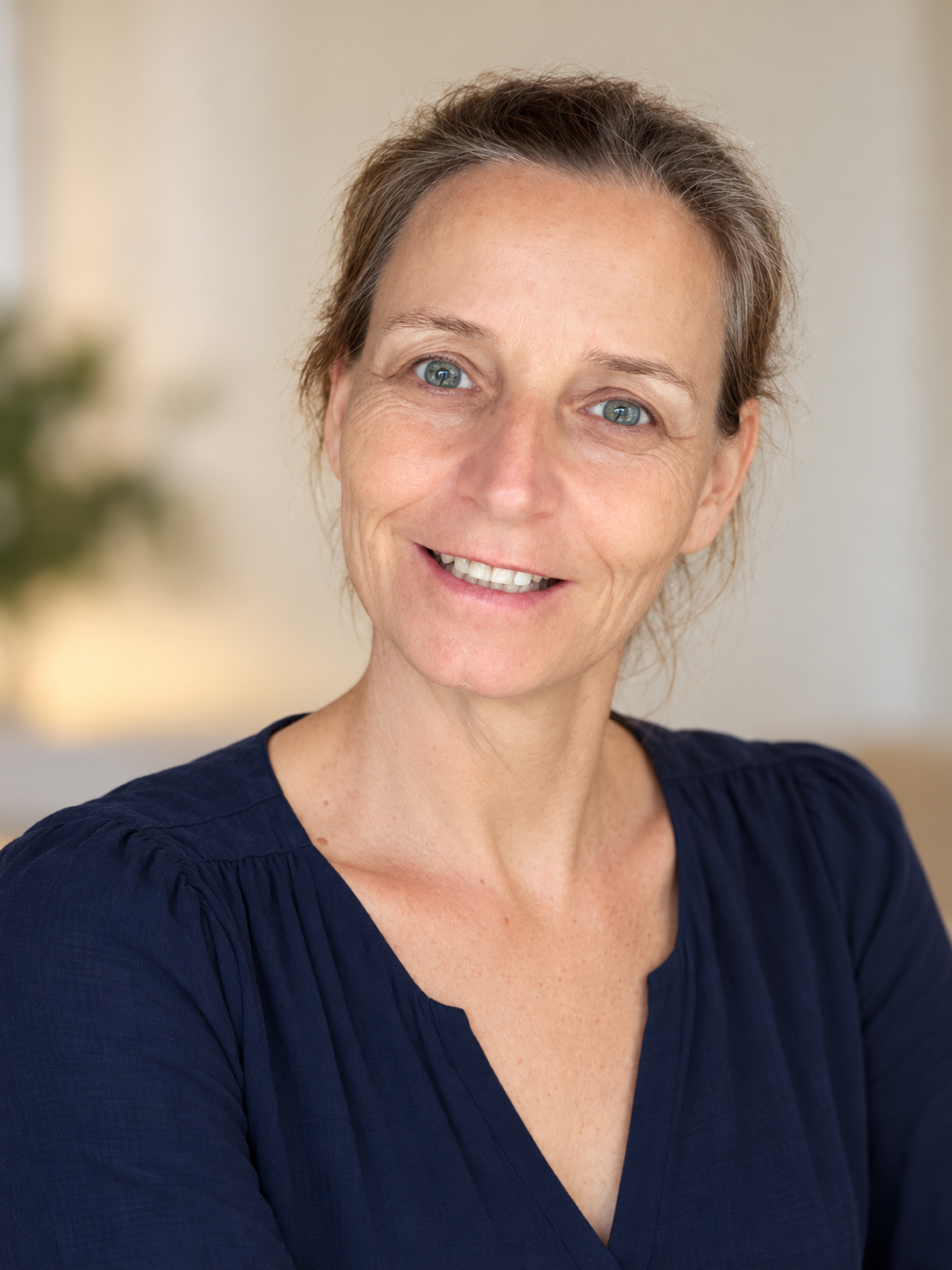
Michaela Kozlik, LCPC, Illinois licensed therapist specializing in anxiety, trauma and burnout therapy for women

Career

A path built on presence

Early Career
Domestic Violence Shelter
Direct work with women in crisis. Trauma, safety, survival — and what it takes to rebuild a sense of self when everything has been stripped away.
Following Years
Young Women Exiting Child Protective System
Supporting young women navigating the end of foster care — systemic trauma, attachment wounds, and building a life without a map.
Mid Career
Community Mental Health
High-volume, high-acuity work across the full spectrum of mental health need. Where I learned to hold space for the full range of human suffering.
Now
Private Practice
Focused work with high-functioning women. Bringing everything from those earlier years into deeper, longer-term therapeutic relationship.

Credentials & Education

  • Licensed Clinical Professional Counselor (LCPC), Illinois
  • MA, Forensic Psychology — The Chicago School of Professional Psychology, 2008
  • IFS-Informed Therapy Training
  • Sensorimotor Psychotherapy, Level One
  • Hakomi Psychotherapy
  • Depth Psychotherapy Orientation
  • Multiple trauma, somatic & attachment trainings
  • 15+ years clinical experience

What to expect

What working with me is like

You do not have to explain yourself
I work with high-functioning women. I already understand the particular exhaustion of being competent. You will not spend sessions convincing me you have a real problem.
I work at the level of the nervous system
Not just your story or your thoughts — the place in your body where the patterns actually live. Somatic work means we include everything, not just what you can articulate.
I'll meet your parts with curiosity
Using an IFS-informed lens means we approach every part of you — even the difficult, defended ones — with genuine interest, not pathology.
The work is not directive or prescriptive
You will not get homework or a protocol. You will get genuine therapeutic presence and space to do the real work at whatever pace your nervous system can handle.
I bring my full self
I am not a blank screen. I bring 15+ years of experience, genuine care, and a willingness to go to the hard places with you — without flinching.
We go slowly enough to actually change
Real change is not fast. But it is also not endless. We work at the depth that produces lasting shifts — not surface-level coping that requires constant maintenance.

Values

What I believe about this work

01

The body holds what the mind has organized away

Insight is the beginning, not the endpoint. Real change happens when we include the body — not as something to manage, but as something to listen to.

02

Every part of you makes sense

There are no bad parts — only parts doing their best with what they have. When we approach even the most defended patterns with curiosity, they can finally begin to shift.

03

You are not a diagnosis

Your symptoms are signals, not identities. Anxiety, depression, burnout — these are the language your system uses when something essential needs attention.

04

The therapeutic relationship is the work

You cannot heal relational wounds in isolation. The relationship between therapist and client — when it is honest, attuned, and real — is itself a vehicle for change.

05

You deserve to be genuinely known

Not managed, fixed, or coached. Therapy at its best is the experience of being fully seen — and that alone can begin to heal what has been hidden for years.

Ready to see if it's a fit?

Individual Therapy · Illinois Telehealth

Therapy that goes where
insight alone cannot reach.

Individual therapy in Illinois for high-functioning women. Somatic, IFS-informed, depth-oriented telehealth sessions for anxiety, trauma, burnout, and perimenopause. Moving beyond coping into real, lasting change.

You might be here if

This work is for women
who are done just managing.

You've done the self-work — and you're still stuck

You perform capability while quietly unraveling

Your body holds what your mind has organized around

You want more than symptom relief

The anxiety, exhaustion, or disconnection has become the baseline — and you're ready to change the baseline


"The nervous system recognizes resonance before the mind does. That's where the work begins."


How we work

The approach follows you —
not the other way around.

Somatic Therapy
Working with sensation, breath, and body awareness to access what words alone cannot reach.
Internal Family Systems
Parts-based work that brings curiosity rather than judgment to every aspect of you.
Polyvagal-Informed
Understanding how the nervous system organizes safety and threat — and how to work with it.
Attachment-Focused
How early relational patterns shape current experience — and how the therapeutic relationship can offer something new.
Trauma-Informed
Recognizing how trauma lives in the body and the nervous system — not just in memory and narrative.
Mindfulness-Based
Present-moment awareness as a tool for working with what's alive right now — not just processing the past.
What becomes possible

Not just coping better.
Living differently.

01

Your nervous system learns to rest — not just recover before the next thing

02

The patterns you can see clearly start to actually change, not just be managed

03

You can be in your body without bracing against it

04

Relationships feel more real — less performance, more actual contact

05

You know what you need, and you can ask for it without apologizing

06

You stop working against yourself — the self-criticism softens into curiosity

A free 20-minute conversation
is where most people start.

Anxiety Therapy · Illinois

You manage it well.
And you're exhausted from managing it.

You might recognize yourself

This is what high-functioning
anxiety looks like.

Anxiety therapy in Illinois for women who are managing it well on the outside — and exhausted on the inside. Somatic, nervous system-informed work that goes deeper than coping strategies.

The Over-Preparer
She prepares for everything — every outcome, every criticism, every way it could go wrong. Exhausting. Effective. She does not know any other way.
The Nighttime Thinker
The day is fine. The night is when it comes. Rumination, replaying, the 3am spiral she cannot seem to interrupt no matter what she tries.
The Body-Carrier
She knows something is wrong because her body will not let her ignore it — tight chest, shallow breath, a stomach that never fully settles.
The Perimenopausal Woman
The anxiety she thought she had handled is back, louder. Hormonal shifts have pulled the rug out and the coping strategies that used to work do not anymore.
The One Who Cannot Rest
Even when she has time off, she cannot settle. Rest feels dangerous. The drive to do more is indistinguishable from survival — because at some level, it once was.
The Invisible Anxiety
She presents as calm, capable, together. Inside is a different story. She has learned to perform ease so convincingly that even people close to her have no idea.

What is actually happening

Anxiety is not a
thinking problem.

Anxiety lives in the nervous system. It is a survival response that learned — usually a long time ago — that the world required vigilance. Telling yourself to calm down does not work because the brain areas generating anxiety are not listening to language.

We work at the level where the anxiety actually lives. Somatic and parts-based approaches let us address the original signal, not just the symptom.

What shifts

What clients often notice

The baseline level of activation in your body begins to lower — not through effort, but because the system is actually starting to regulate

More space between trigger and response — not that things stop affecting you, but you have more choice

The ability to actually rest — because your nervous system starts to believe it is safe to

Less internal noise — the constant background monitoring begins to quiet

You do not have to keep managing it alone.

Trauma Therapy · Illinois

You've carried this
for a long time.

You might recognize yourself

Trauma does not always look like
what you think.

Trauma therapy in Illinois for high-functioning women carrying developmental, relational, and complex trauma. IFS-informed, somatic, depth-oriented telehealth sessions statewide.

The One Who Minimizes
"Nothing that bad happened to me." And yet her body tells a different story. She learned early that her experience was too much, or not enough to count.
The Caretaker
She learned that her safety depended on managing everyone else's emotions. Now caretaking feels like love — and she cannot tell the difference anymore.
The High-Functioning Survivor
She survived something — or many things — and built an impressive life on top of it. What she did not do is process it. The cracks are starting to show.
Perimenopause & Old Wounds
The hormonal shifts of perimenopause have surfaced trauma she thought she had dealt with. The body keeps its own schedule.
The Relationally Wounded
Not a dramatic event — a thousand small experiences of not being seen, held, or valued. Attachment wounds that have shaped every relationship since.
The One Who Numbs
Food, wine, work, scrolling, busyness. She knows she is avoiding something but it has never felt safe enough to stop and find out what.

What is happening in the body

Trauma is a
nervous system wound.

Trauma is not what happened — it is what happened to your nervous system in response. Those moments live in the body, often for decades, shaping behavior in ways that feel automatic because they are.

Somatic and parts-based approaches let us work with trauma at the level where it lives — creating conditions for the nervous system to complete what it could not complete then.

What we're working toward

What recovery can look like

The past beginning to feel like the past — not constantly pressing through into the present

More capacity to stay present in relationships without going into survival mode

Less need to numb, avoid, or perform — because what was being protected starts to feel safe enough to show

A different relationship with your own history — not forgetting, but no longer being defined by it

You do not have to carry it by yourself anymore.

Burnout Therapy · Illinois

You're not lazy.
You're running on empty.

You might recognize yourself

Burnout that rest does not fix.

Burnout therapy in Illinois for women whose exhaustion runs deeper than rest can reach. Depth-oriented, nervous system-informed therapy via telehealth throughout Illinois.

The One Who Never Stopped
She has been performing, producing, and achieving since she can remember. The engine finally ran out of fuel. She did not know she was running until she stopped.
The Chronic Caretaker
She gives to everyone. She does not know how to receive. The burnout is not from working too hard — it is from the exhaustion of being everything to everyone else.
The Perimenopausal Burnout
She was already running lean. Then hormonal change stripped away the last of the buffers. Her body is done with the old way, even if her mind is not.
The People-Pleaser
She is exhausted by her own agreeableness. The constant monitoring of others' reactions, the pre-emptive appeasement, the yes when she means no.
The Identity Loss
She has been performing a version of herself for so long that the burnout has stripped away the performance — and she does not know what is underneath. That is actually the beginning.
The One Who Has Everything
By every external measure, her life is good. The guilt about feeling this depleted makes it worse. She cannot say this out loud to almost anyone.

What is really happening

Burnout is not a
time management problem.

The burnout that brings women to therapy is not fixed by a vacation, better boundaries, or fewer commitments. It is the burnout that comes from years of performing, shrinking, overgiving — at a pace that was never sustainable.

That kind of burnout requires work at the level of identity, nervous system, and the deeper patterns that drove the pace in the first place.

What recovery looks like

What shifts when the
work goes deep enough

Knowing what you actually want — not what you think you should want or what would disappoint people least

The capacity to receive — help, care, rest — without it feeling like failure

A different relationship with productivity — where doing comes from genuine desire, not compulsion or fear

Knowing who you are when you are not performing — and finding that person more than enough

You've been running on empty long enough.

Therapy Intensives · Illinois

For when 50 minutes a week
is not enough.

Extended therapy sessions in Illinois — 90-minute, half-day, and full-day intensives for high-functioning women ready to do deeper work than weekly therapy allows. Available via telehealth statewide.

Who intensives are for

Some things need more room.

At a Crossroads
A major life transition that needs concentrated space — not another 50-minute session where we just get started.
Stuck in the Same Pattern
Working on something for months or years and it has not shifted. A concentrated intensive can move what regular sessions have not.
Ready to Go Deep
She knows what she wants to work on and wants the time and space to actually do it — not dip in and surface before anything real happens.
Geographically Limited
She travels for work, has a difficult schedule, or wants to do concentrated work rather than fitting it around a busy life.

Pricing

Intensive options

Extended Session
$525
90 minutes
Enough time to actually follow something to completion rather than surfacing just as it opens.
Half-Day Intensive
$950
~3 hours with break
The most requested option. Real processing, not just preparation to process. Often the equivalent of months of weekly sessions.
Full-Day Intensive
$1,700
~6 hours with breaks
For those ready to move through something significant. Deep, sustained work that is simply not possible in the standard weekly frame.

Note: Intensives are available to current clients and, in some cases, new clients following an extended consultation. All intensives begin with a conversation about fit and readiness.

Ready to go further?

Investment & Fees

Transparent pricing.
No surprises.

Fee schedule

What to expect

Initial Consultation
$0
20 minutes · Free
A real conversation to see if we're a good fit. No commitment, no obligation.
Individual Session
$188
50 minutes · Per session
Weekly or biweekly individual therapy. Somatic, parts-based, depth-oriented work tailored to you.
Intensives
$525+
Starting at $525
90-minute, half-day, and full-day options for deeper, concentrated work.

Insurance

Out-of-network explained

I am not in-network with insurance companies. This is intentional — it allows me to provide therapy without insurance companies determining what is "medically necessary," limiting session numbers, or requiring diagnoses that follow clients through their records.

Many clients with PPO plans receive partial reimbursement. After each session I provide a superbill you can submit directly to your insurance.

"What are my out-of-network mental health benefits? What is my deductible and what percentage do you reimburse after it is met?"

Your rights

Good Faith Estimate

Notice of Right to a Good Faith Estimate

Under the No Surprises Act, you have the right to receive a Good Faith Estimate before scheduling. Visit cms.gov/nosurprises for more information.

Payment

  • Payment due at time of service
  • Credit card, HSA, and FSA accepted
  • Superbills provided upon request
  • 24-hour cancellation notice required

Questions about the financial piece?

Bring them to the consultation. There is no awkward question about money.

Free Consultation

A free 20-minute conversation.
That is all.

No commitment. No intake forms to fill out first. Just a real conversation about whether this feels like the right fit.

How it works

Three simple steps

01
Choose a time
Pick a 20-minute window using the scheduler below. You'll receive a confirmation with a secure video link.
02
We talk
You share what's bringing you in. I share how I work. We see if there's a fit — no pressure to decide on the spot.
03
We go from there
If it feels right for both of us, we schedule your first session. If not, I'll try to point you toward what might actually help.

Schedule

Book your consultation

Online Scheduler

Your scheduling tool (Acuity, SimplePractice, etc.) embeds here.

Or reach out directly: Michaela@inpsychotherapy.com


Common questions

Before you reach out

Do I need to fill anything out before we talk?+
No. The consultation is a real conversation — not a form, not an intake process. You show up, we talk, we see if it feels right.
What if I am not sure therapy is what I need?+
That uncertainty is fine. The consultation is exactly the place to have that conversation. If therapy is not the right fit, I will say so and try to point you toward what might actually help.
How long does it typically take to get an appointment?+
Consultations are typically available within one to two weeks. I maintain a small, focused practice, so openings are limited.
Do you see clients in person?+
I work via telehealth, which means I can see anyone in Illinois. Video sessions are conducted through a secure, HIPAA-compliant platform.
What is your cancellation policy?+
I ask for 24 hours' notice for cancellations. Late cancellations and no-shows are charged the full session fee.
Can I do an intensive if I am not already your client?+
In some cases, yes. Intensives for new clients require an extended consultation and some preparation work beforehand.

You can also reach out directly

Writing

Thoughts on women, depth,
and what actually helps.

Trauma · Relationships
Why Trauma Survivors Become Caretakers
The connection between early trauma and the compulsion to manage everyone else's emotions — and what it costs the women who learned this as survival.
Perimenopause · Trauma
Navigating Perimenopause and Trauma
Why hormonal change can surface old wounds with new intensity — and what it means that your body keeps its own timeline for recovery.
Relationships · Burnout
When Self-Reliance Becomes Emotional Isolation
The point at which the independence you built for survival starts to keep out the very things — and people — you actually need.

"The women I work with are already self-aware. What they need is someone who can sit with them in the places insight has not reached."

Ready to do the real work?